The Shape of Knowing
Why the answers we trust most are often the ones we understand least.
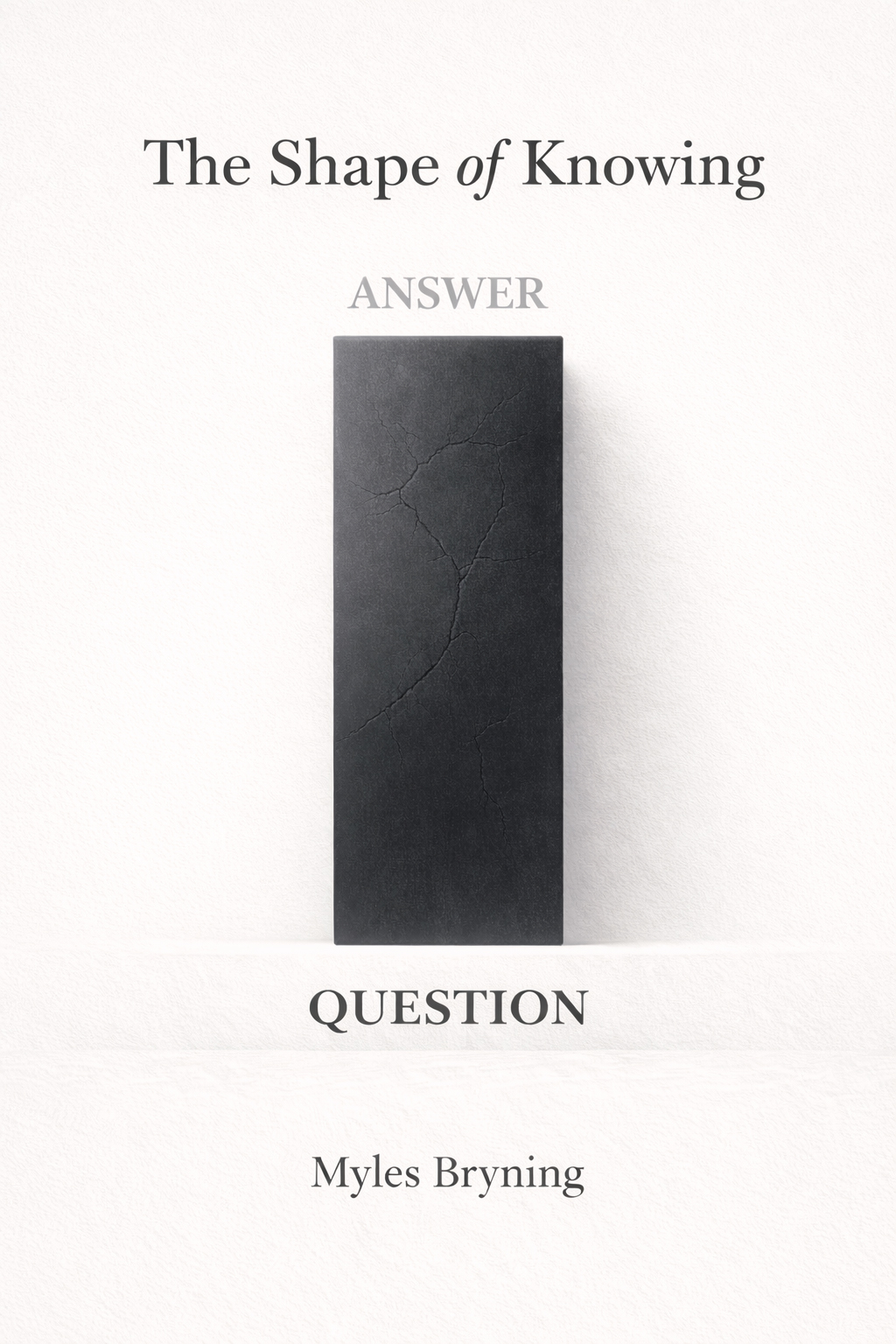
The Shape of Knowing explores how modern answers gain authority, and why that authority is so often misplaced.
The book argues that the most dangerous answers are rarely wrong. They are plausible, confident, and incomplete. They feel solid enough to act on, yet fragile enough to fail once conditions change.
Rather than focusing on misinformation or error, the book examines a quieter failure mode: answers that are accepted without their assumptions being understood, tested, or preserved.
What this book examines
- Why confidence is routinely mistaken for correctness
- How assumptions disappear once conclusions are accepted
- Why facts cannot be treated as isolated or timeless objects
- How answers become harder to inspect the moment they are trusted
Central argument
Answers are not atomic facts. They are structures built on context, time, and conditions.
When those supporting structures are hidden, confidence grows faster than understanding. Decisions feel justified, yet cannot explain themselves when challenged.
This book argues that showing how an answer was reached matters more than how confidently it is delivered.
Who this book is for
This book is written for people who make decisions they have to live with:
- leaders and operators
- engineers and analysts
- policymakers and advisors
- anyone uneasy with how easily "reasonable" answers harden into unquestioned truth
What the reader gains
A new way of seeing answers not as static truths, but as load-bearing structures that can carry more or less weight. The book offers language for doubt, and a framework for understanding when confidence is earned rather than inferred.