The Books: An Overview
Four books exploring how confidence forms, how knowledge moves, and what trustworthy answers must become.
What these books are about
These four books explore a single problem from different angles:
Why do modern systems produce answers that feel confident, spread easily, and fail quietly?
Rather than focusing on misinformation or technical error, the books examine a subtler issue: how reasonable answers become fragile once they are trusted, reused, automated, and scaled.
Three of the books form a connected series. The fourth explains why the problem exists at all.
The Fragile Knowledge Trilogy
These three books explore a simple but increasingly urgent problem: we rely on answers that travel faster, farther, and with more authority than our ability to understand or maintain them.
Across organisations, institutions, and automated systems, decisions are increasingly shaped by summaries, models, dashboards, and machine-generated outputs. These answers often arrive polished and confident, but with their assumptions hidden, their uncertainty collapsed, and their conditions forgotten. Over time, they harden into defaults, rules, and infrastructure.
The trilogy follows the full lifecycle of this process.
It begins by examining how answers become trusted in the first place, not through proof, but through fluency, confidence, and social reinforcement. It then traces how those answers degrade as they move through systems, losing context while gaining authority, until they become difficult to challenge even when they no longer fit reality. Finally, it asks what knowledge must become if it is to survive scale without quietly accumulating risk.
Together, the books argue that most serious failures do not come from bad data or malicious intent, but from fragile knowledge: conclusions that were reasonable when formed, but never designed to be reused, automated, or embedded at scale.
Rather than proposing more certainty, the trilogy makes a different case. That durable knowledge must be able to show its working, carry its doubt, signal when confidence should decay, and invite revision before failure forces it.
This is not a critique of intelligence or technology. It is a call to redesign how we treat answers once they leave the moment they were agreed.
In a world where decisions increasingly act on our behalf, the question is no longer whether answers are correct at the moment they are produced, but whether they are fit to be trusted over time.
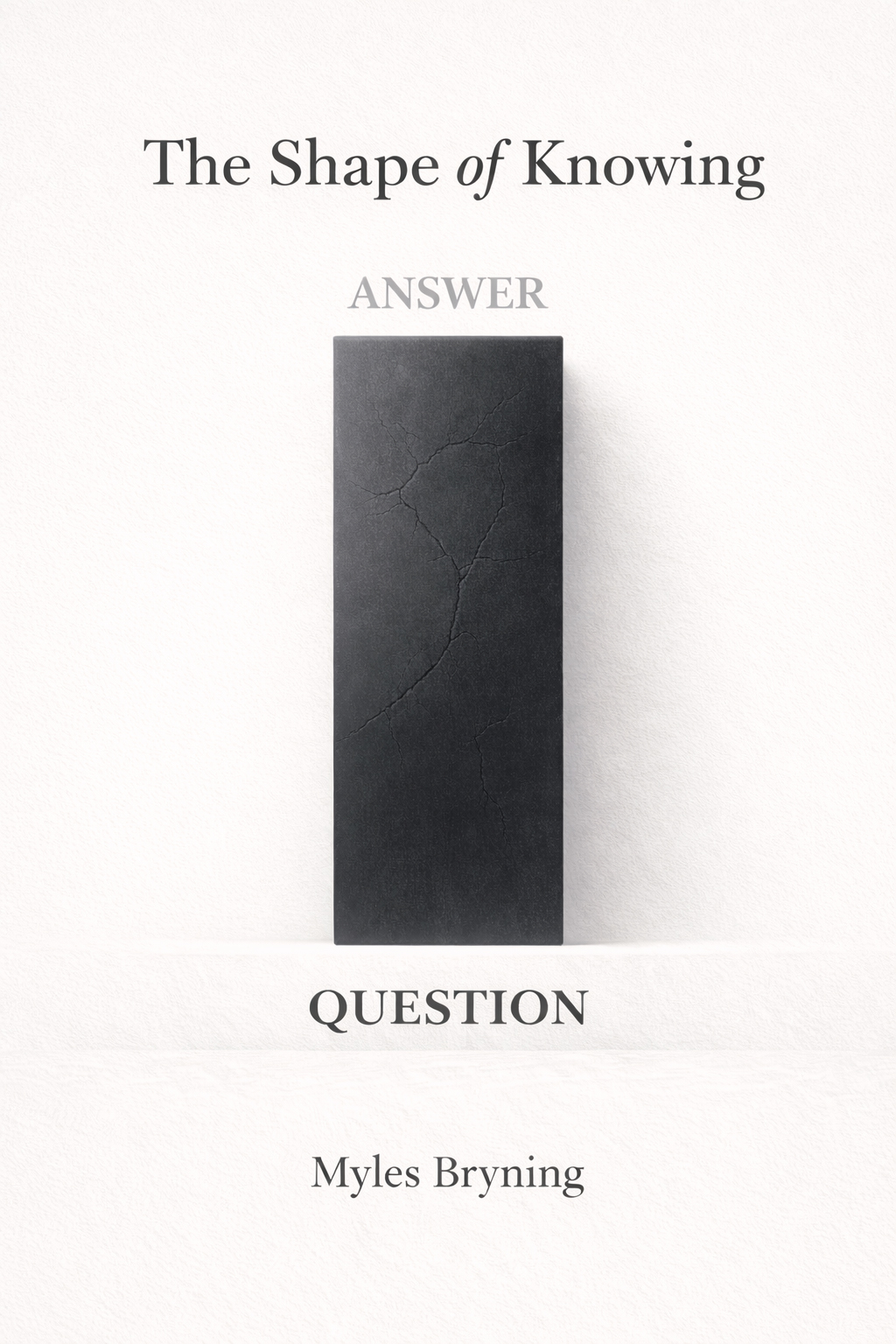
The Shape of Knowing
Why the answers we trust most are often the ones we understand least.
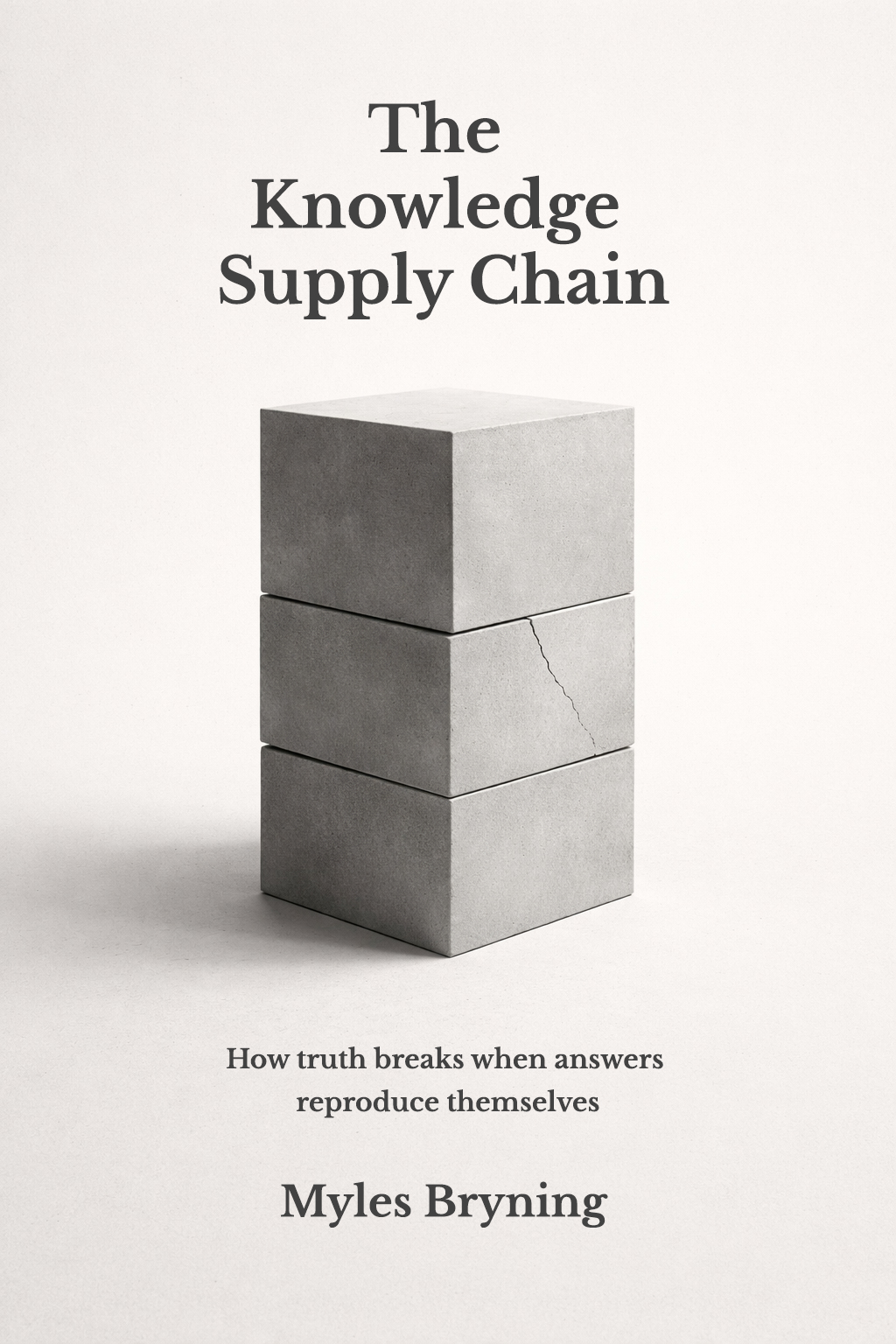
The Knowledge Supply Chain
How answers move, degrade, and fail as they are reused at scale.
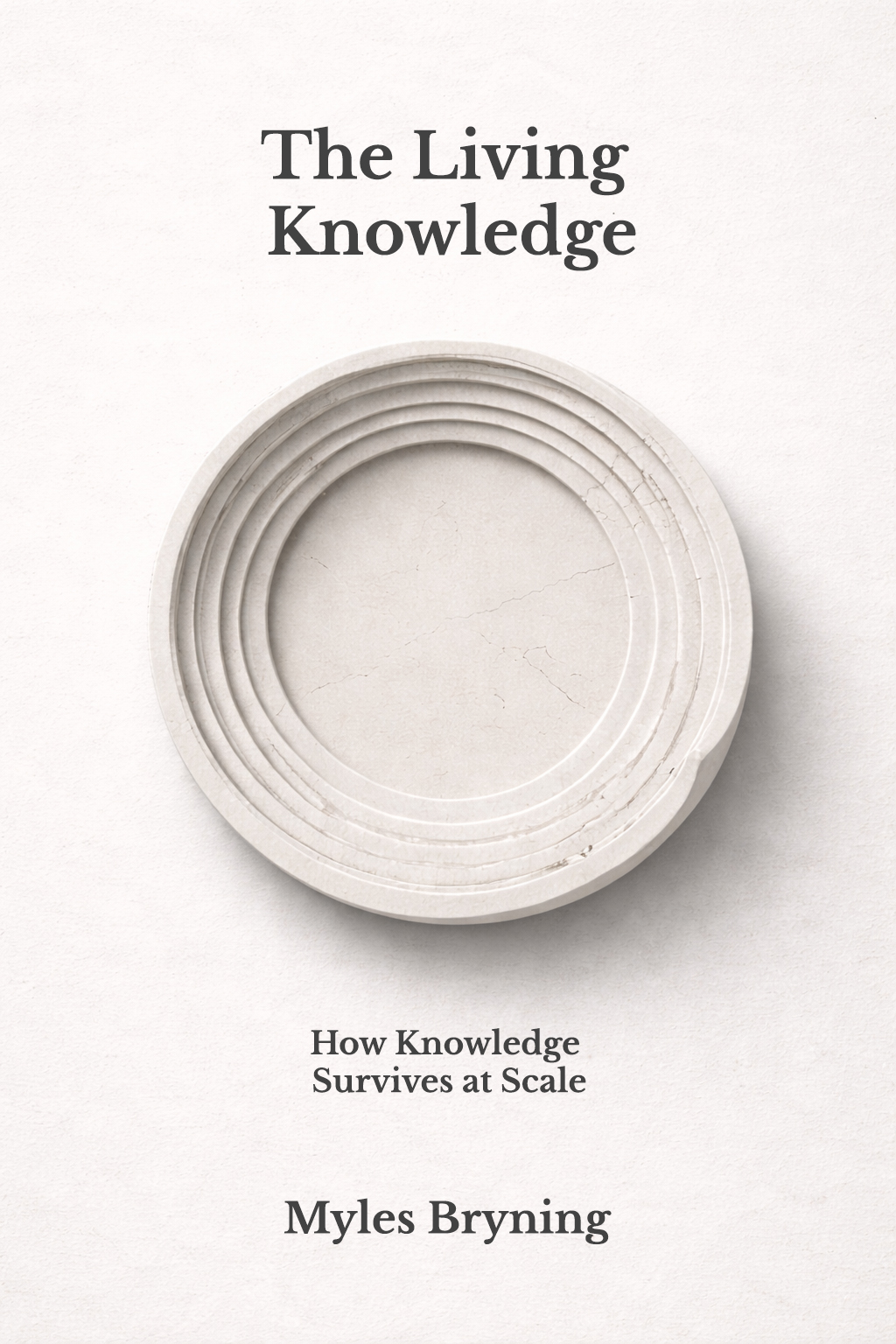
The Living Knowledge
What knowledge must become once answers are reused, automated, and trusted at scale.
The companion book
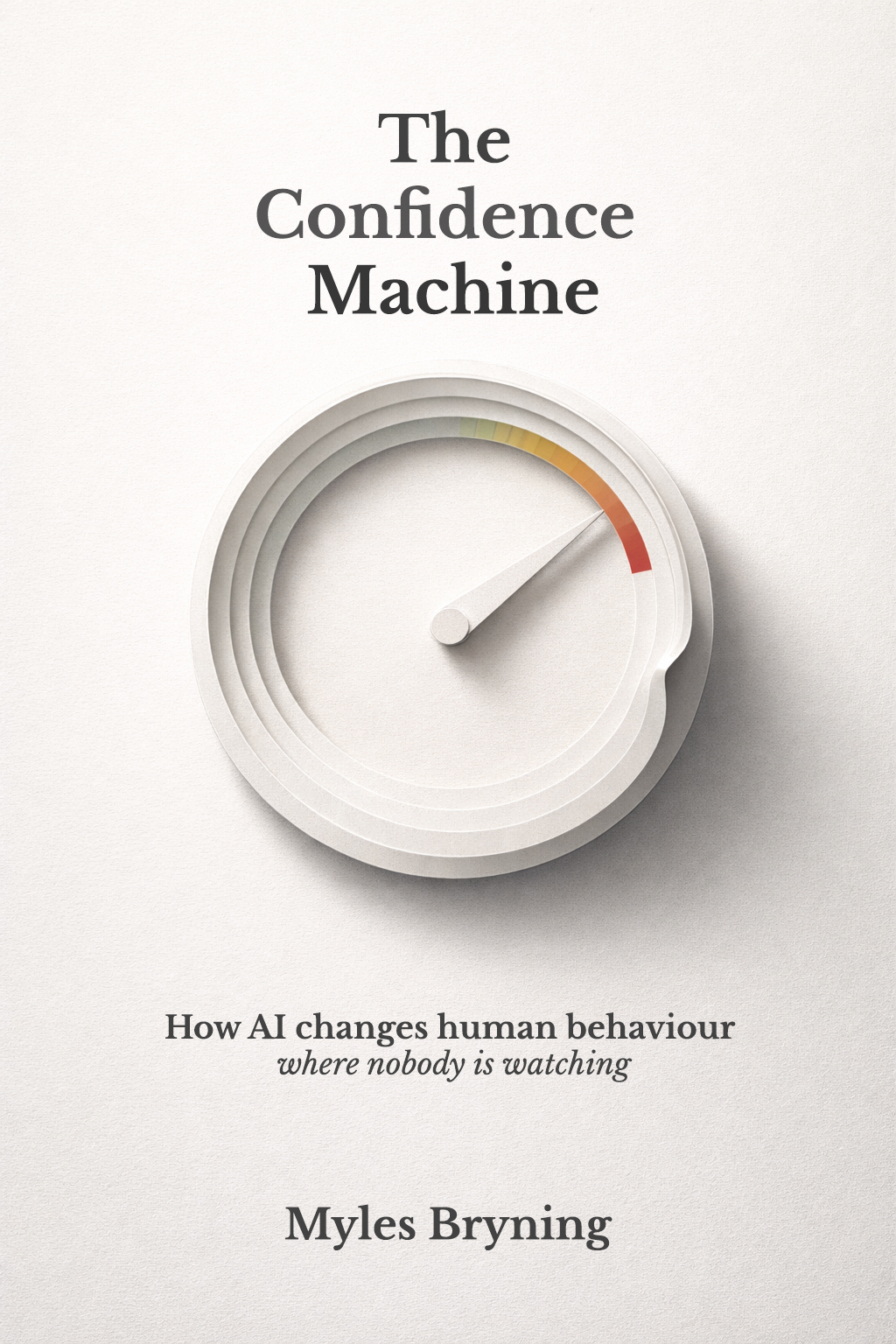
The Confidence Machine
Standalone
This book explains why the problem feels inevitable.
It explores how modern organisations, tools, and interfaces systematically reward confidence over accuracy. From meetings and dashboards to automation and AI systems, confidence compounds because it reduces friction and speeds decisions.
The book focuses less on knowledge itself and more on the behavioural and institutional forces that turn provisional answers into unquestionable defaults.
It provides the psychological and structural backdrop that makes the three-book series make sense.
How the four books fit together
Each book answers a different question:
- The Shape of Knowing shows how answers become trusted without being understood
- The Knowledge Supply Chain reveals where those answers degrade as they spread
- The Living Knowledge explores what knowledge must become to survive scale
- The Confidence Machine explains why fragile certainty dominates modern systems
Together, they form a single argument:
The problem is not that we lack information. It is that we trust answers faster than we can inspect them.
Where to start
- New to the work: start with The Shape of Knowing
- Interested in organisations and scale: follow with The Knowledge Supply Chain
- Thinking about AI and the future of trust: read The Living Knowledge
- Curious why this problem keeps repeating: read The Confidence Machine at any point
None of the books require technical background. They are written for people who make decisions they have to live with.
A note on tone
These books are not predictions, manifestos, or instruction manuals.
They are attempts to describe pressure points that already exist, clearly enough that they can no longer be ignored.
If they leave you slightly more cautious about confident answers, they have done their job.